
Describe the symptom rather than diagnosing the part
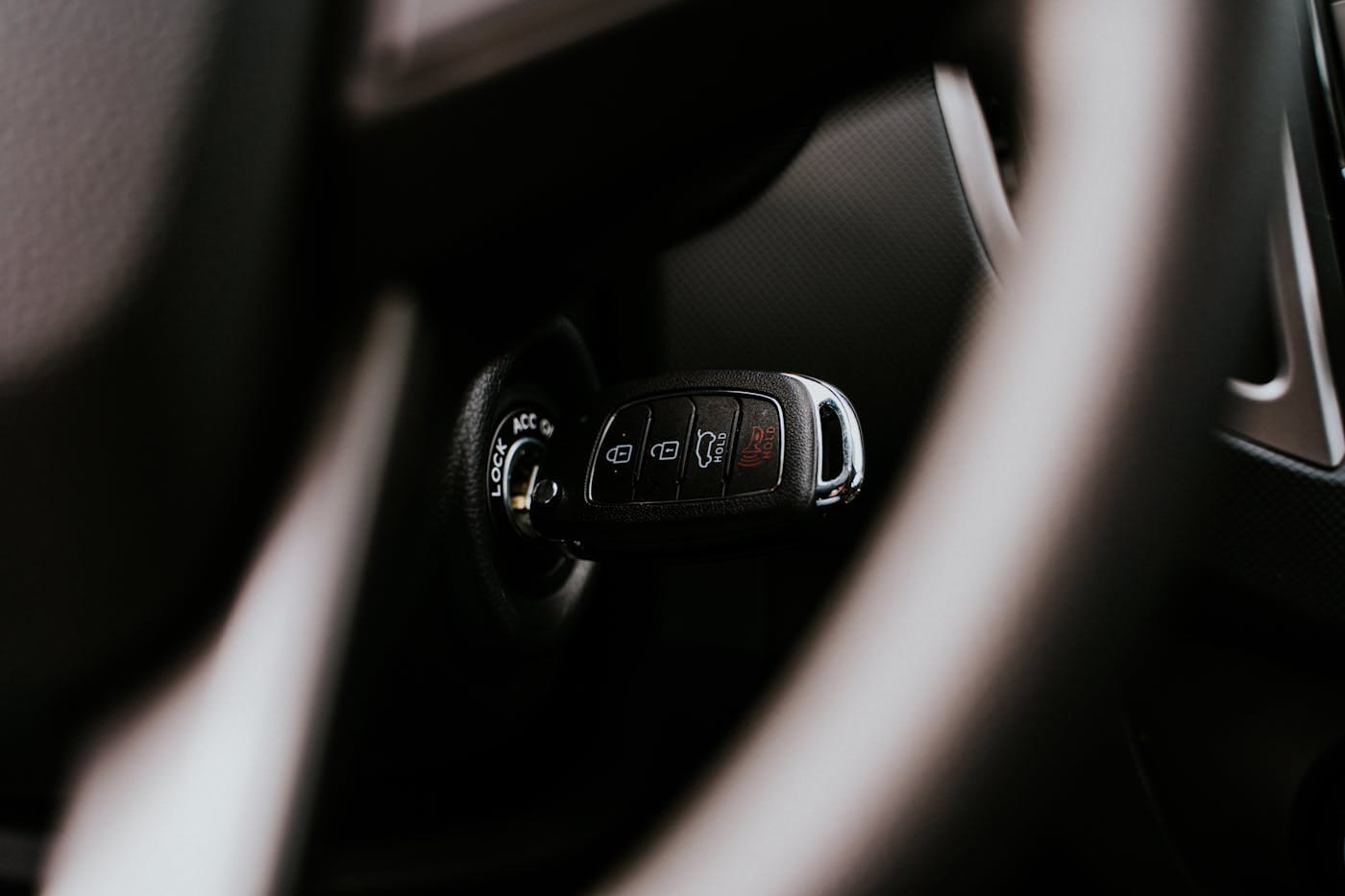
Does the key refuse to turn, remain stuck after shutdown, or turn normally while the vehicle will not start? Does the remote operate? Are there warning messages? These details help distinguish a mechanical lock problem from an electronic or broader vehicle fault.
A worn key, a damaged cylinder, a selector or steering interlock, an ignition switch, a weak vehicle battery, and an immobilizer problem are not interchangeable diagnoses. A website checklist cannot determine the cause from one symptom alone.
Use only the owner’s normal checks
Consult the instructions for the exact vehicle. Confirm the normal starting or shutdown sequence and any model-specific backup procedure for a weak fob battery. Do not force the key, repeatedly fight a steering lock, dismantle the steering column, or bypass an electrical interlock.
If the vehicle stalls, behaves unpredictably, or presents an immediate road hazard, prioritize a safe location and appropriate roadside or emergency assistance. Do not continue driving merely because the key can still be turned.
Check recalls without assuming one applies
Use the VIN in NHTSA’s recall lookup to check for open safety recalls and follow the manufacturer’s instructions when one applies. A known issue on a different year or model does not establish that your vehicle has the same defect. A recall check also does not replace diagnosis of the current problem.
Match the repair route to the diagnosis
A locksmith may be suitable for a supported mechanical key or lock-cylinder problem. An electrical fault, vehicle module issue, recall repair, or unsupported security procedure may require a dealer or automotive repair specialist. Ask whether mobile service is appropriate before arranging it.
If a cylinder is replaced, discuss whether it can retain the existing mechanical keying and whether any separate electronic authorization work is involved. If an electrical switch is replaced, do not assume that automatically includes new keys or cylinders.
Compare the scope behind the price
Ask which diagnosis, parts, labor, access work, programming, or service charges are included. Confirm what happens if the initial symptom has a different cause. Availability and ordered parts may affect scheduling; no route is universally faster or guaranteed to avoid transport.
Keep the assessment and invoice. For a service inquiry, call (202) 830-0706 with the vehicle details and symptoms or review ignition repair planning. The key replacement quote guide covers costs when the key itself needs replacement.