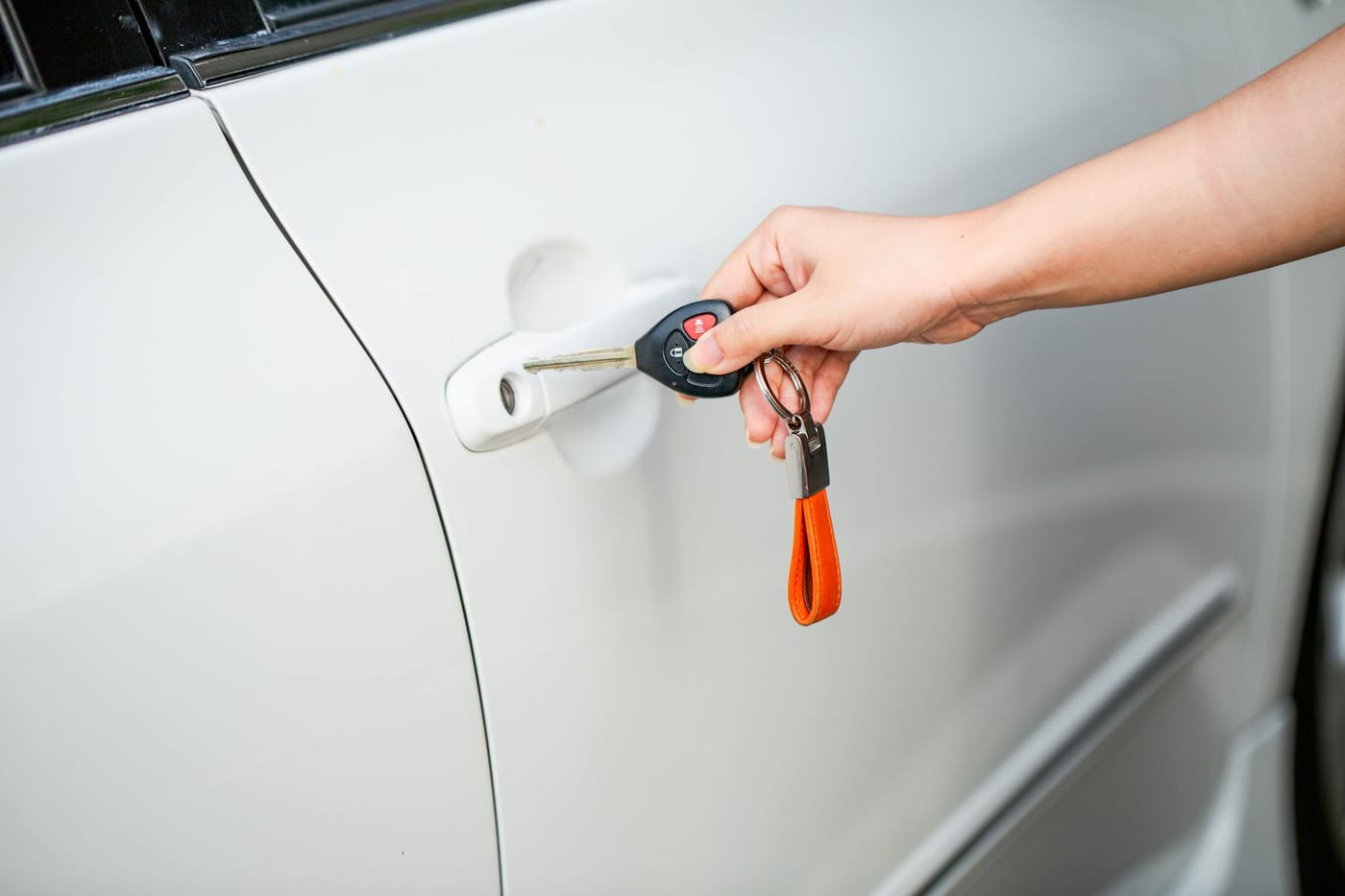

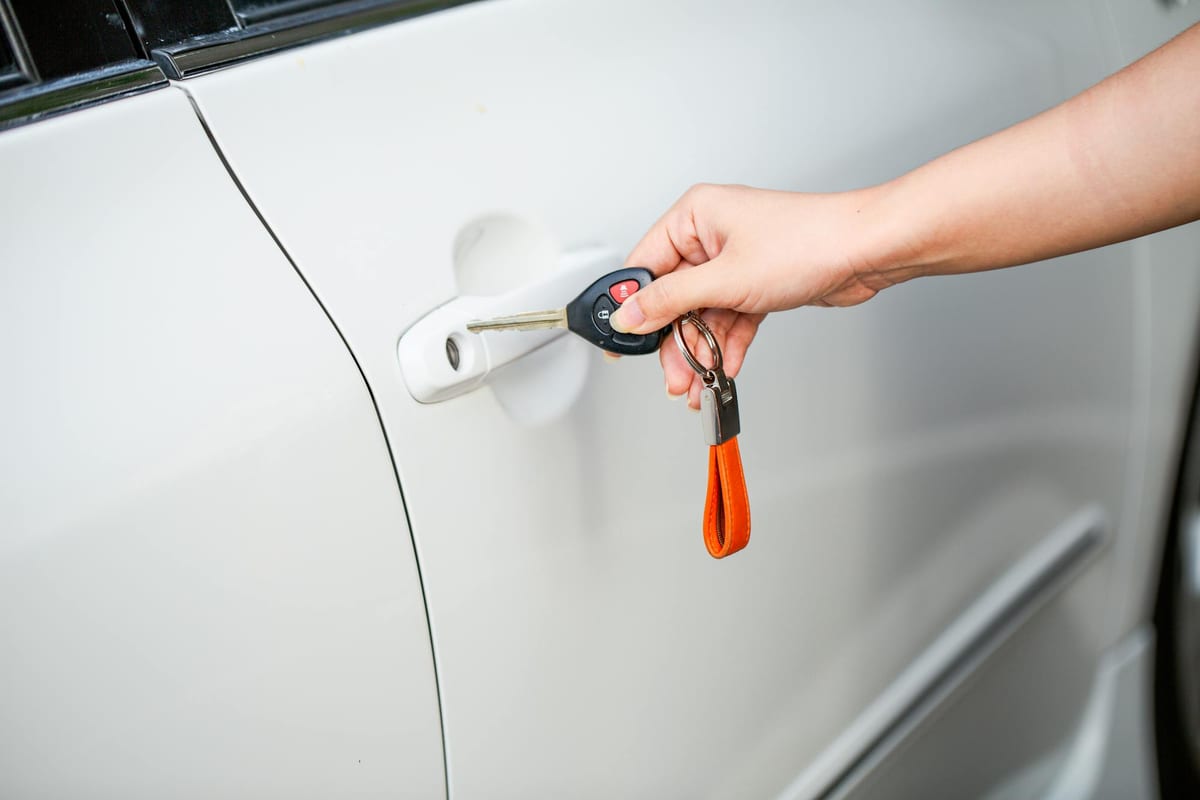
Know the vehicle’s locking behavior
Read the owner’s instructions for automatic locking, passive entry, trunk operation, and any anti-lockout feature. Features vary with model, configuration, and the condition of the vehicle. Do not assume a sensor will always detect a key left inside.
Before closing the door or trunk, confirm the key or credential is with you. Give it a consistent place on your person instead of setting it in a cargo area while loading. A key routine reduces avoidable mistakes without changing the vehicle’s normal security behavior.
Keep a compatible spare accessible
If you only have one working credential, ask about a suitable spare before it is lost. Store it securely with a trusted person or in another location that remains accessible when the car is locked. Do not keep the only backup in the same vehicle or bag as the primary key.
Some vehicles have a mechanical emergency blade, while others use different backup arrangements. A blade that opens a door may not authorize starting. Confirm the supported function and test it using the manufacturer’s instructions; do not assume every vehicle can use a generic wallet key.
Prepare electronic backups in advance
A manufacturer app may offer remote access only on supported vehicles with the required setup, connectivity, account, and service plan. Confirm it before an emergency. A phone with no power or signal can make that route unavailable.
Follow the specified battery type and replacement procedure for the fob. A warning or reduced operating range deserves attention, but repeated start attempts are not a reliable diagnosis of a depleted battery. Check the owner’s guidance for other possible faults and the applicable backup-start method.
Include children and urgent safety
Never leave a child unattended in a vehicle. Make a habit of checking the whole vehicle before locking and walking away, and keep keys out of children’s reach. If you see a child alone in a locked vehicle, NHTSA says to act immediately and call 911. Do not wait for a routine locksmith visit.
If anyone is in immediate danger or the vehicle is creating a serious traffic hazard, seek appropriate emergency assistance first. For an ordinary lockout, move to a safe waiting place and keep your phone available.
Know what to confirm when help is needed
Provide the make, model, year, exact location, and what remains accessible. Ask about authorization, compatibility, arrival estimate, and charges. Avoid forcing trim, using improvised tools, or relying on a promise that every vehicle can be opened without damage.
See car lockout assistance or call (202) 830-0706 to check current availability. If the key is missing entirely, use the all-keys-lost planning guide.