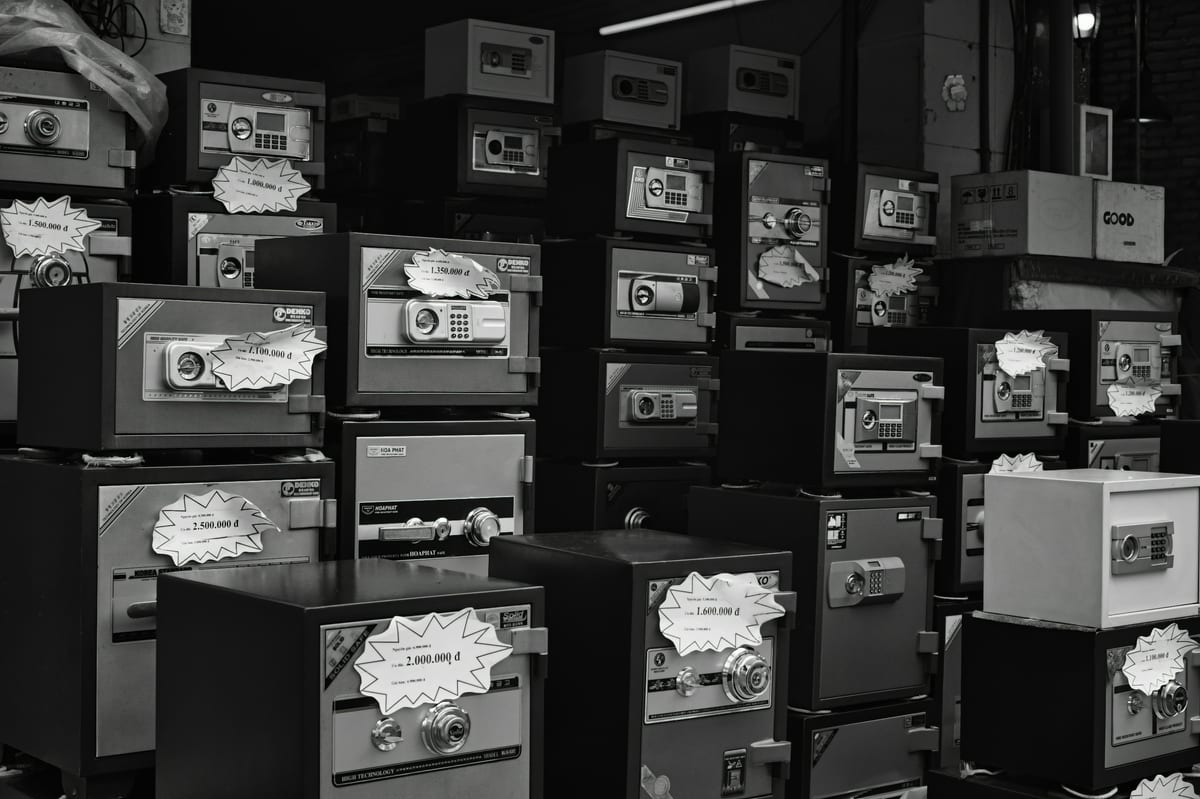

Choose the safe for what you need to protect
List the contents, usable internal space, and protection you require. Fire resistance, burglary resistance, and water resistance are different claims. Check the exact model’s documented rating or test information instead of assuming that weight or a “fireproof” label establishes all three.
Paper records and electronic media can have different protection needs. Ask the manufacturer what the product is designed for and compare those limits with your intended use.
Assess the delivery route and location
Record the safe’s external dimensions and weight, then consider doors, stairs, landings, elevators, and the final floor. A safe that fits through the front entrance may not be suitable for an upper-floor location or the proposed moving route.
Use an appropriately equipped installer or mover for a heavy unit. If structural capacity is uncertain, obtain qualified advice before delivery. Do not rely on a general statement that every basement, wall, or timber floor is suitable.
Follow the safe’s anchoring requirements
Anchoring can reduce tipping and removal risks when the safe is designed and installed for it. The method depends on the model, approved fixing points, substrate, and manufacturer’s instructions. Do not drill extra holes or choose wall mounting simply because a nearby wall is convenient.
Liberty Safe’s installation guidance illustrates why the subfloor and approved fixing system matter. Use the instructions for your actual safe; its example is not a universal anchor specification or evidence that this business is a Liberty dealer.
Confirm concealed services and structural restrictions before drilling. New holes can affect the unit or surrounding building, and the permissible installation should be resolved before moving equipment arrives.
Consider the environment and day-to-day use
Review exposure to water, humidity, heat, and the space needed for the door to open. A low-floor location can create different risks from an upper-floor location. Select the position against the manufacturer’s requirements and the actual property conditions.
Decide who can operate the safe, how credentials are stored, and how recovery or service will be requested. Keep combinations and recovery details out of ordinary quote messages. Maintain a record of the model and service information somewhere appropriate.
Define the service before booking
Ask whether the quote includes delivery, moving, placement, anchoring, setup, and removal of packaging or old equipment. Confirm any floor protection, access constraints, and exclusions. A photograph alone may not establish route or structural suitability.
Call (202) 830-0706 with the safe model, dimensions, weight, and proposed location to discuss the scope and whether the available service is suitable. Review home safe service information before arranging work.