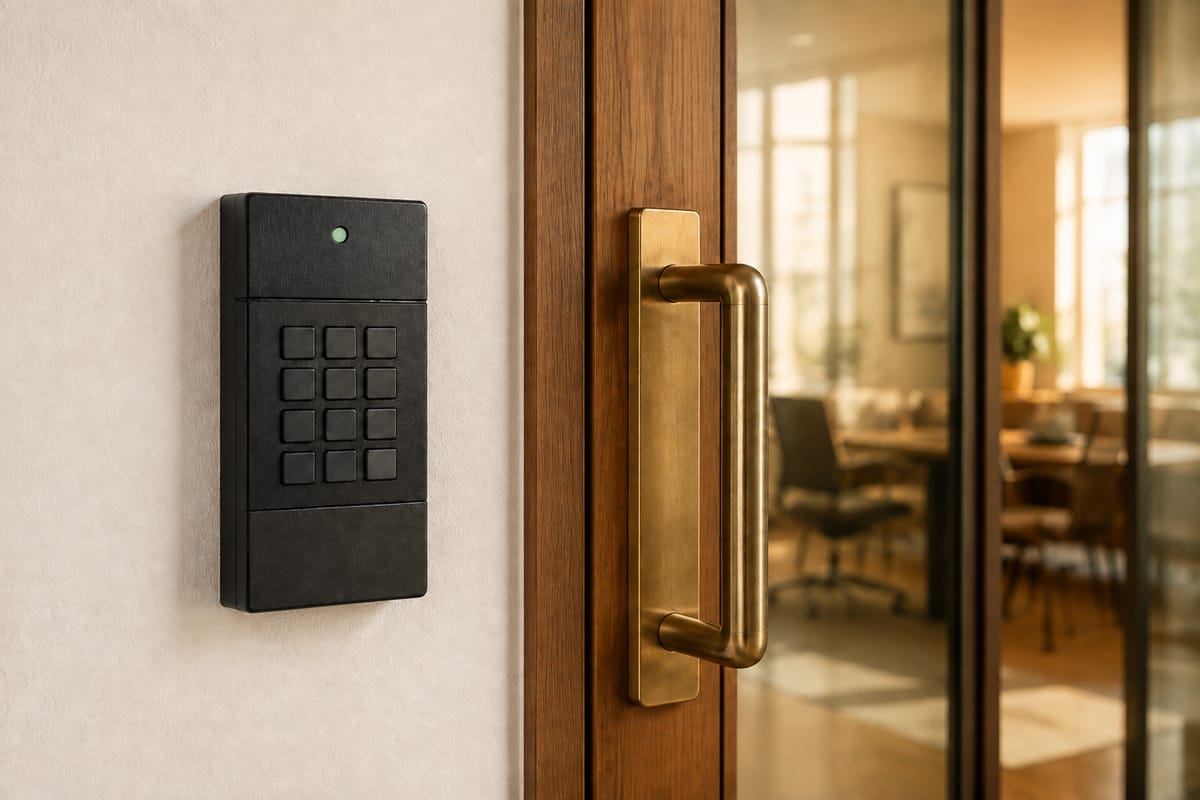
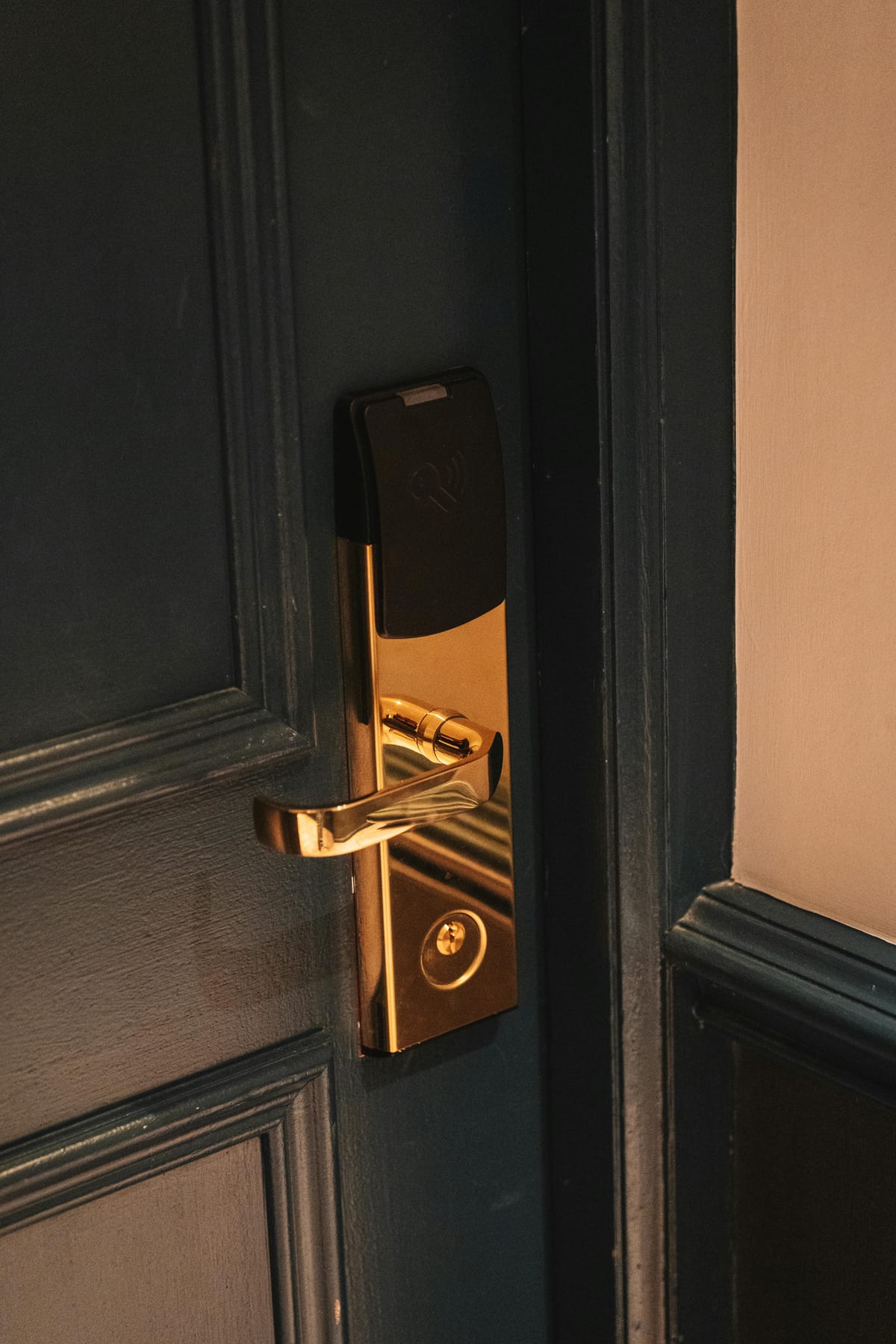
A smart lock can be a deadbolt
“Deadbolt” describes a locking mechanism. “Smart” describes electronic or connected functions. Many smart locks operate a deadbolt, so the choice is often between a mechanical deadbolt and a connected version of the same general type of hardware.
Compare two questions separately: how the lock and opening perform physically, and how people receive and use access. A phone app does not establish the lock’s resistance to attack. A strong mechanical lock does not manage guest codes.
Compare the physical opening first
Check the door, frame, hinges, strike, existing preparation, and room for the proposed hardware. An older mortise lock cannot be assumed to interchange with a bored deadbolt. A motorized bolt should not be expected to overcome a door that binds.
Look for the exact product’s certification and installation instructions. BHMA’s residential label distinguishes security, durability, and finish. Do not treat a brand name, a commercial grade, and a high-security cylinder feature as interchangeable evidence.
Fasteners and strike reinforcement must suit the assembly and substrate. There is no universal screw length that is appropriate for every timber, metal, or rated opening. For a rental or shared entrance, confirm owner and building requirements before altering hardware.
Decide how you want to manage access
A mechanical lock can be useful when you want straightforward key operation without electronic credentials. You still need a plan for lost keys, spare access, wear, and changes in who should enter.
A smart model may offer codes, mobile access, schedules, or notifications. Check which functions that exact model supports and what they require. Remote access may depend on a bridge, account, service subscription, or internet connection. An event log records the system’s activity; it does not prove who physically walked through the doorway.
Make the fallback plan model-specific
Do not assume all smart locks have a key cylinder or emergency battery terminals. For example, Google’s Nest × Yale guidance describes a key-free model with a specific temporary-power method. Other locks use different arrangements.
A physical override can help with some electronic failures, but a jammed bolt, damaged cylinder, or misaligned door can still prevent entry. Follow the manufacturer’s instructions and keep a permitted alternate access plan. Neither mechanical nor electronic hardware makes a lockout impossible.
Choose for your household
List the people who need access, the way permissions end, the available backup, and the door’s constraints. Compare the installed scope rather than only the device price. The smart-lock buying checklist covers account and compatibility questions in more detail.
For help with the opening, see residential lock services or call (202) 830-0706 with the existing hardware and desired change. Confirm compatibility, the assessment needed, and the proposed charges before arranging work.