Start With the Opening and the Applicable Requirements
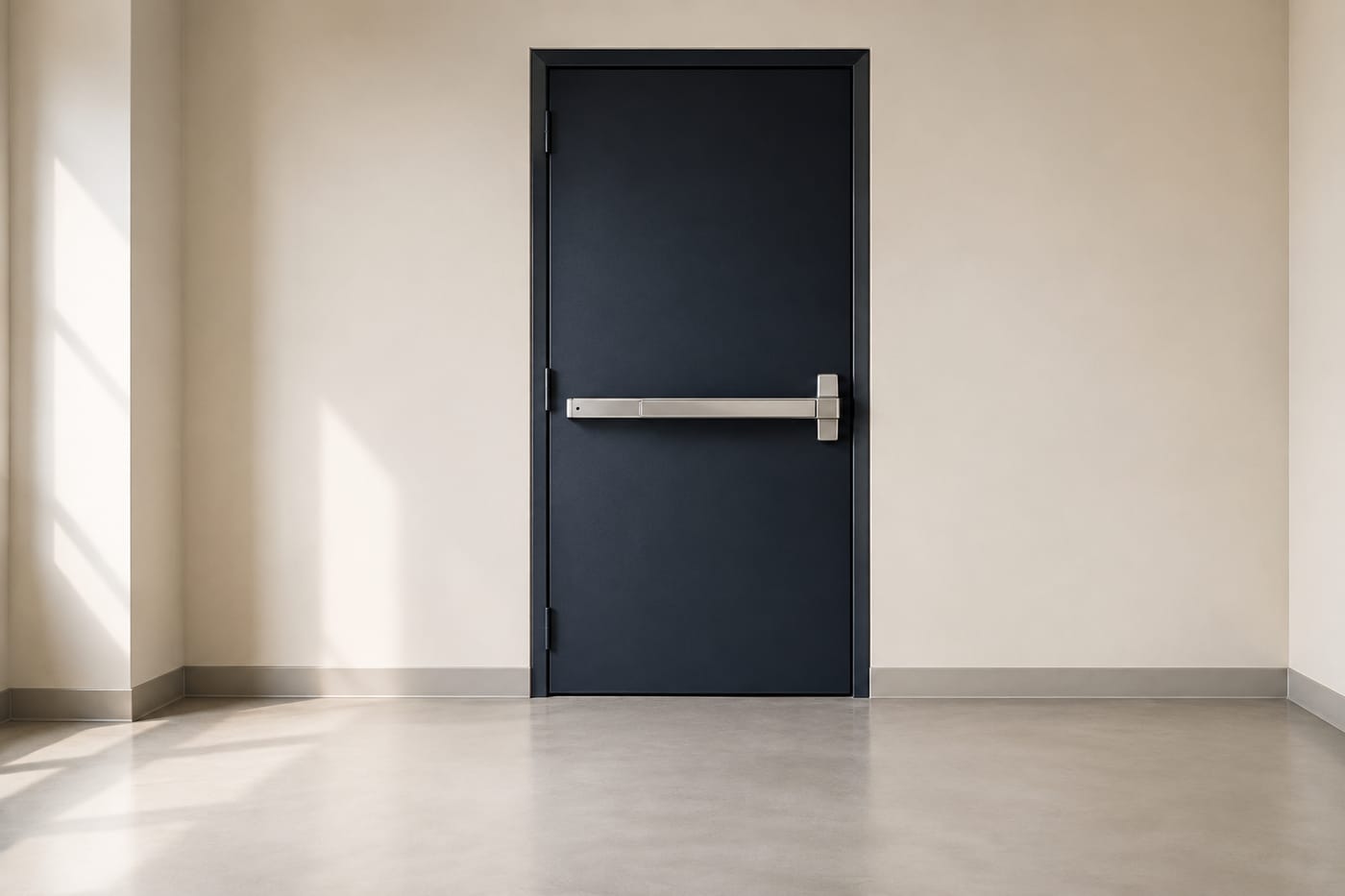
Panic hardware requirements are not the same for every commercial door. The adopted code, occupancy, occupant load, location, and other conditions affect the specification. Have the responsible design professional or authority confirm what is required for the opening before ordering hardware.
A website checklist cannot establish that a specific building complies. The useful starting point is a clear record of the door, its intended function, and the reason work is being considered.
Gather the Existing Information
Record the device manufacturer and model, the door and frame labels, and the symptoms of any fault. Include whether the opening is a single door or a pair, how entry from outside is controlled, and whether alarms or electronic access are connected.
If the bar binds, the door rubs, or the latch fails to engage, have the complete opening assessed. Replacing the bar alone may leave a door-alignment, closer, or strike problem unresolved.
Distinguish Panic Hardware From Fire Exit Hardware
Fire exit hardware is tested for fire-door use as well as panic operation. Ordinary panic hardware is not automatically suitable for a rated opening. Consult the device and assembly documentation.
Allegion’s code-requirements overview explains this distinction and why device selection depends on the application. Use it as background alongside the requirements confirmed for your project.
Review Electronic Functions Carefully
Outside entry control, an audible alarm, and an exit delay are different functions. Do not assume that adding a reader or an alarm justifies changing how occupants leave. Any proposed delayed or controlled release needs an application-specific design and approval.
The hardware’s power-loss behavior also needs review with the complete opening. A label such as fail-safe or fail-secure does not describe every exit function or settle all requirements.
Keep Safety and Maintenance in the Scope
Report a device that does not release reliably to the building’s responsible person and arrange prompt assessment. Follow the facility’s safety procedures while the fault is addressed. Do not add an improvised lock, chain, or other obstruction as a workaround.
Ask the proposed quote to identify the device, compatible components, adjustments, system work, and records. Confirm who is responsible for required inspections or acceptance. A replacement product does not itself guarantee an inspection result.
For help defining the hardware work, see panic bar repair and installation or fire exit hardware. Call (202) 830-0706 with the door details and the authorized building contact.