


Coordinate with the people who authorize access
An employee departure should follow the organization’s approved personnel and security process. The responsible HR, management, IT, facilities, and building teams should agree which access changes are needed, who will make them, and when. A locksmith does not determine the employment decision or the person’s legal rights.
Use a documented list of credentials and spaces rather than assumptions about the circumstances of the departure. Keep personal and sensitive access information within the organization’s approved channels.
Account for physical keys
Record issued keys, returned keys, missing keys, and the doors each could operate. Include cabinets, storage areas, mailrooms, vehicles, and shared entrances where relevant. A returned key is not proof that no copy or borrowed credential exists.
If a key remains unaccounted for, assess the risk and the suitable hardware response. Rekeying may work for compatible cylinders, while a controlled key system may require its administrator or supplying provider. Restricted distribution can improve control, but does not make copying or misuse impossible.
A lost master key can affect many cylinders. Do not assume that one key can always be removed mathematically without rekeying affected locks. Review the actual key plan and compatible change options.
Revoke electronic access through the system owner
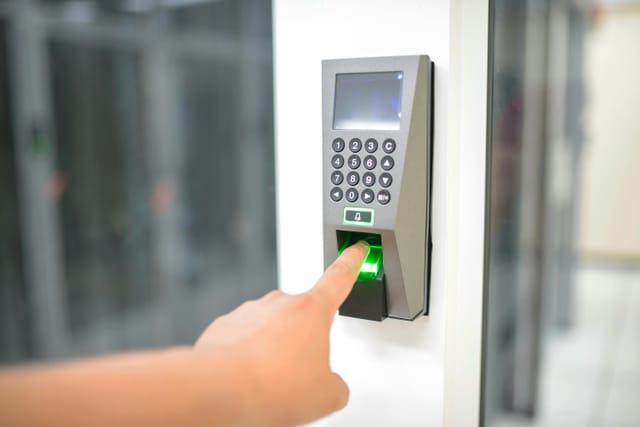
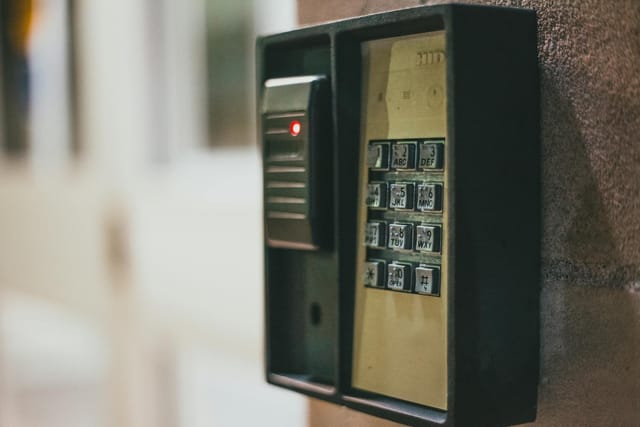
Identify cards, fobs, mobile credentials, shared PINs, administrator accounts, and integrations. Confirm that the intended change has reached the relevant controllers or offline locks and that any remaining shared credential has been handled appropriately.
NIST’s electronic physical access control overlay includes termination and credential-revocation controls. It is useful background for a structured process, not a statement that every private office is governed by identical requirements.
Check the configured logs and retention process where records are needed. A denied access event may be recorded by some systems, but logging and notification should be verified instead of assumed.
Preserve normal access and exit
Plan changes so authorized staff can still perform their work and occupants retain the required exit operation. Coordinate with the landlord before altering shared building hardware or credentials. Do not use an improvised lock or blocked exit as a personnel-control measure.
Record the approved work, changed credentials, new keys, and person accepting the result. Limit access to the resulting key and permission records.
Prepare a bounded service request
For physical key or lock work, provide the affected doors, existing system, approved timing, and authorized contact. Discuss charges and any assessment needed. Call (202) 830-0706 or review commercial rekeying. The master-key guide explains the wider impact of a shared key hierarchy.