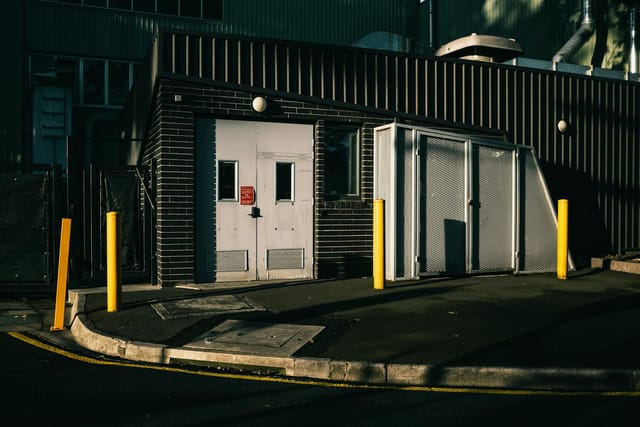

Identify what the door serves
A courthouse can contain public entrances, offices, records areas, and specialized controlled spaces. These openings should not receive a single generic hardware specification. The responsible court or facility authority must identify the requirements for the actual door and the qualifications needed to work on it.
A public-facing service page is not evidence that a business holds a court contract, clearance, or detention-equipment qualification. Procurement should verify required records before granting access or sharing controlled plans.
Distinguish ordinary and specialist work
An office latch adjustment may be a mechanical task. An interlocked transfer area or other specialized controlled opening involves an approved system and operating procedure. A contractor should not infer authority to modify that system from experience with commercial card readers or electric locks.
The initial scope should identify the opening, affected component, ordinary fault description, and responsible contact. Sensitive operational details should be handled through the authority’s approved channel after eligibility is established.
Specify evidence for the actual assembly
Where a project calls for ballistic, forced-entry, fire, or other tested performance, require evidence for the specified door, frame, hardware, glazing, anchors, and supporting construction. These are separate characteristics, not interchangeable labels.
UL’s bullet-resisting equipment overview describes testing under defined conditions. It does not support a promise that any heavy door is bulletproof or impenetrable. The UL fire-rated door guide similarly emphasizes the applicable assembly and components.
Coordinate the work window
The authorized court contact should approve access, escorts, tools, photography, public circulation, and any temporary operating arrangement. Court schedules and procurement conditions can affect when work is possible. Urgency does not waive the facility’s authorization process.
For workplace exits, OSHA 1910.36 addresses required exit operation. The complete set of project requirements must come from the responsible design and building authorities; a stronger lock cannot be evaluated in isolation from egress.
Define the handover
Before work begins, agree the approved parts, tests, witnesses, defect process, and records. Separate the service contractor’s completion record from the facility authority’s acceptance decision. Assign responsibility for restoring temporary arrangements and for any key or credential changes.
An authorized project contact can review courthouse door and lock planning and submit a nonsensitive scope inquiry. This guide does not assert that DC Local Locksmith has performed work for a named court or agency.